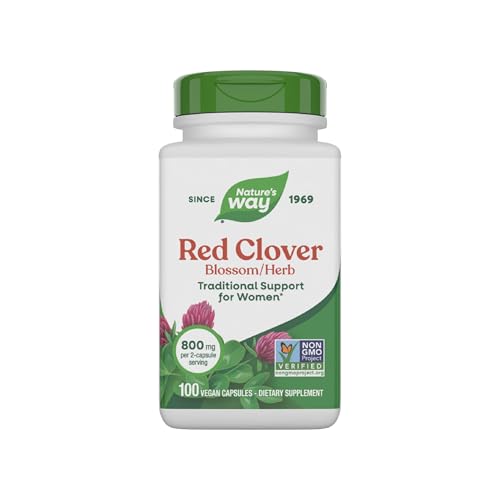
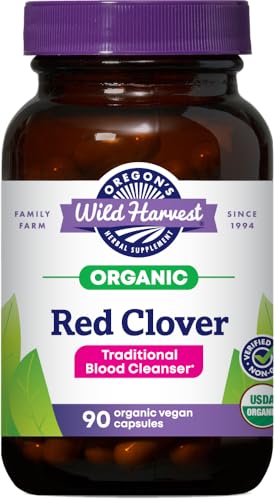
Many women exploring options for managing midlife changes are familiar with red clover (Trifolium pratense) in supplement form, often due to its isoflavone content. These plant compounds are a focus of research concerning women’s health during menopause [1].
This post contains affiliate links. As an Amazon Associate we earn from qualifying purchases at no extra cost to you.
However, a common question arises: can these beneficial compounds be obtained directly from red clover as a food source, or are supplements the primary route? Understanding the nature of red clover as a plant can shed light on its potential as a dietary component.
What Are Red Clover Isoflavones?
Red clover is a legume, a type of plant known for its nitrogen-fixing properties in soil. It has been recognized for its phenolic compounds, including isoflavones, which contribute to its antioxidant profile [2]. These isoflavones are a class of polyphenols that are naturally present in the plant [3].
The primary isoflavones found in red clover include genistein, daidzein, formononetin, and biochanin A. Research has explored the potential influence of these compounds on various biological processes[4][5]. While supplements concentrate these compounds, the plant itself contains them inherently.
Red Clover as a Forage Crop: A Historical Perspective
Historically, red clover has been widely cultivated as a forage crop for livestock. It is a temperate forage legume, valued for its nutritional content in animal feed [6]. For instance, studies have examined the digestibility of red clover when included in the diets of animals like pigs [7].
This long history of use in agriculture highlights that red clover is a plant that can be consumed, albeit primarily by animals in many traditional contexts. Its role in agricultural systems is also related to its ability to form nodules with rhizobia, which can promote plant growth [8] and its contribution to seed yield components [9]. The presence of these components in animal feed can even affect the composition of dairy products, such as their polyunsaturated fatty acid (PUFA) content [10].
Consuming Red Clover Directly: Sprouts and Herbal Teas
While mature red clover plants are not typically found in the produce aisle for human consumption, red clover sprouts are an emerging dietary option. Red clover sprouts have been studied for their phenolic compounds and their potential influence on cell growth and migration [4]. Furthermore, research has indicated that red clover sprout consumption may have an impact on metabolic syndrome [5]. This suggests that sprouts could be a viable way to incorporate red clover into a human diet.
Another way some individuals consume red clover is through herbal teas. Infusions made from the dried flowers or leaves of red clover are available. While these teas would contain some of the plant’s compounds, the concentration of specific isoflavones in a typical cup of tea might vary considerably compared to standardized supplements. The preparation method and the specific parts of the plant used can influence the final composition of the tea.

Comparing Dietary Intake to Supplementation
The primary difference between obtaining red clover isoflavones through diet versus supplements lies in concentration and standardization. Supplements are typically formulated to deliver a specific, measured amount of red clover extract, often standardized for its isoflavone content [1]. This allows for a more consistent intake of these specific compounds.
When consuming red clover through dietary sources like sprouts or teas, the amount of isoflavones can be highly variable. Factors such as growing conditions, plant maturity, processing, and preparation methods can all influence the final concentration of beneficial compounds. Therefore, achieving a consistent or specific intake level of red clover isoflavones through diet alone may be challenging.
Practical Considerations for Red Clover Dietary Sources
For those interested in exploring red clover as a dietary component, red clover sprouts offer a more direct route than the mature plant. They can be grown at home or sometimes found in specialty food stores. Incorporating them into salads, sandwiches, or smoothies could be a way to add red clover to one’s diet.
Herbal teas, while less concentrated, can also be a pleasant way to consume some of the plant’s compounds. However, it’s important to remember that the effects of dietary intake, particularly from non-standardized sources, may differ from those observed in studies utilizing concentrated extracts in supplement form.
The Role of Red Clover in a Balanced Diet
Red clover, whether as sprouts or in teas, can be considered part of a varied and balanced diet rich in plant-based foods. Plants like red clover contain a spectrum of beneficial compounds, including polyphenols and antioxidants, that contribute to overall nutritional intake[3][2].
While red clover supplements are designed for a targeted intake of isoflavones, incorporating red clover in its whole food forms can offer broader nutritional benefits alongside its specific compounds. This approach aligns with a general emphasis on diverse plant consumption for wellness.

References
- Red clover (Trifolium pratense) for menopausal women: current state of knowledge. Menopause (New York, N.Y.), 2001
- Antioxidant profile of Trifolium pratense L. Molecules (Basel, Switzerland), 2012
- Polyphenols in Agricultural Grassland Crops and Their Health-Promoting Activities-A Review. Foods (Basel, Switzerland), 2023
- The Effects of Trifolium pratense L. Sprouts’ Phenolic Compounds on Cell Growth and Migration of MDA-MB-231, MCF-7 and HUVEC Cells. Nutrients, 2020
- Red Clover (Trifolium pratense L.) Sprout Prevents Metabolic Syndrome. Journal of nutritional science and vitaminology, 2020
- Therapeutic Potential of Temperate Forage Legumes: A Review. Critical reviews in food science and nutrition, 2016
- Ileal amino acid digestibilities in pigs of barley-based diets with inclusion of lucerne (Medicago sativa), white clover (Trifolium repens), red clover (Trifolium pratense) or perennial ryegrass (Lolium perenne). The British journal of nutrition, 1999
- Plant growth-promoting native rhizobia isolated from red clover (Trifolium pratense L.) nodules: potential for metal-phytostabilization. BMC microbiology, 2025
- QTL analysis of seed yield components in red clover (Trifolium pratense L.). TAG. Theoretical and applied genetics. Theoretische und angewandte Genetik, 2006
- Effect of components in red clover on plant lipase activity with possible consequences on PUFA-content of dairy products. Communications in agricultural and applied biological sciences, 2006
These statements have not been evaluated by the Food and Drug Administration. This information is not intended to diagnose, treat, cure, or prevent any disease. Content is for informational purposes only and is not medical advice; consult a qualified healthcare provider before starting any supplement. As an Amazon Associate we earn from qualifying purchases.
