Ready to buy? Check current prices on Amazon and compare deals before you decide.
This post contains affiliate links. As an Amazon Associate we earn from qualifying purchases at no extra cost to you.
When considering red clover isoflavone supplements, a key aspect for many women is understanding the quality and composition of the products available. The supplement market offers a wide range of options, and discerning what makes one product different from another can be a thoughtful process.
This article explores the concepts of purity and third-party testing, and why these considerations may be valuable when evaluating red clover isoflavone supplements. Our aim is to provide information to help you make informed choices about your well-being.
What Does ‘Purity’ Mean for Red Clover Supplements?
In the context of dietary supplements, ‘purity’ generally refers to the absence of undesirable substances and the consistent presence of the intended ingredients. For red clover isoflavone supplements, this means the product ideally contains the expected isoflavones (such as genistein, daidzein, formononetin, and biochanin A) without significant levels of contaminants. These contaminants could potentially include heavy metals, pesticides, or microbial impurities that may be introduced during cultivation, harvesting, or manufacturing.
Ensuring purity is a multifaceted endeavor. It begins with the sourcing of the red clover plants, considering where and how they are grown. The extraction process used to isolate the isoflavones also plays a role in the final product’s purity. Manufacturers often employ various techniques to concentrate the desired compounds while minimizing unwanted elements.
How much that sourcing matters has been quantified. Sampling cultivated red clover across a single growing season, researchers found that the individual isoflavones do not move together: daidzein and genistein content peaked around June to July, while formononetin and biochanin A peaked in early September. Extracts of the above ground parts generally contained more isoflavones, and showed more oestrogenic activity in an endometrial cell assay, than extracts of the flower heads alone. Two standard cell based assays also disagreed with each other on the same extracts, which led the authors to advise caution about which assay is used to standardise a botanical supplement biologically.[1] Plant part and harvest timing are therefore real variables sitting behind two otherwise identical looking labels, which is also why a label that breaks out the individual isoflavones tells you more than one printing only a total.
The Role of Consistency and Potency
Beyond just purity, consistency and potency are also important factors. Consistency refers to a product having the same amount of active ingredients in every batch and every dose. Potency refers to the concentration of the active compounds. For red clover isoflavone supplements, this means ensuring that each capsule or serving contains the stated amount of isoflavones.
Without consistent potency, it can be challenging for individuals to gauge their intake accurately. A supplement that varies significantly in its active compound content from one batch to another may not provide a predictable experience.
It is worth being precise about how much a verified potency figure actually tells you, because this has been measured directly. Researchers analysed the isoflavone composition of eleven commercial dietary supplements based on soy or red clover, then tested each one for its ability to activate the two oestrogen receptor subtypes in reporter gene assays. The measured total isoflavone contents were mostly comparable to what the manufacturers claimed, so on that sample the declared numbers largely held up. What did not hold up was the inference usually drawn from them: the red clover based supplements differed considerably in their oestrogenic potency at those receptors, and the authors concluded that different isoflavone rich products cannot necessarily be compared with respect to possible biological effects.[2] One finding in that study is worth reporting in its own scope rather than generalising: the shortfall against manufacturer information, once content was expressed as aglycone equivalents, was in the soy based products, not the red clover ones.
The practical consequence is narrower than it first sounds, and more useful when shopping. Matching two red clover products milligram for milligram on their declared isoflavone total is not the same as matching what they do in the body. A potency figure, independently verified or not, is a statement about quantity.
What is Third-Party Testing?
Third-party testing involves an independent organization evaluating a product to verify its contents, purity, and quality. This means a company separate from the supplement manufacturer and supplier conducts tests on the product. The results of these tests can offer an unbiased assessment of what’s inside the bottle.
For red clover isoflavone supplements, third-party testing can verify several key aspects: identity (confirming it is indeed red clover extract), purity (checking for contaminants like heavy metals, pesticides, and microbes), and potency (ensuring the amount of isoflavones listed on the label is actually present). This external verification can provide an additional layer of confidence for consumers.
When a supplement undergoes third-party testing, it often receives a certification or seal from the testing organization. These seals can indicate that the product has met certain standards for quality and content. However, it’s important to understand what each specific seal represents, as different organizations may have different testing protocols and standards.
Why Consider Third-Party Testing for Red Clover Supplements?
The dietary supplement industry is regulated differently than pharmaceuticals. While manufacturers are responsible for ensuring the safety and labeling accuracy of their products, the FDA does not approve dietary supplements before they are marketed.
That is usually where the explanation stops, which leaves the impression that no standard applies at all. One does, and it is binding. Manufacturers must comply with the current good manufacturing practice regulations for dietary supplements at 21 CFR Part 111, a rule the FDA describes as requiring activities that will ensure the identity, purity, quality, strength and composition of dietary supplements.[3] Third party testing is therefore not filling a regulatory vacuum. It is independent confirmation that a manufacturer met a standard it was already legally obliged to meet, which is a smaller claim than it is usually given credit for and still a worthwhile one.
Considering third-party testing can be a way to gain additional assurance about the product you choose. It offers an independent verification that the supplement contains what it claims and is free from common contaminants. This can be particularly relevant for those who prefer to have extra confidence in the products they incorporate into their wellness routines. While red clover isoflavones are widely researched, the overall evidence on their benefits is still considered limited, making quality control all the more important for informed personal use.
How to Identify Quality Red Clover Isoflavone Supplements
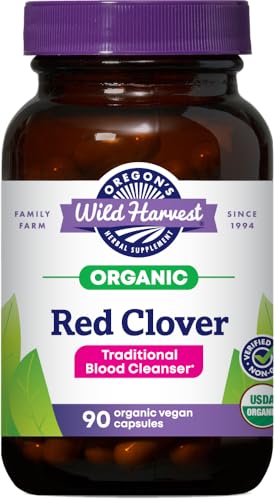
When seeking red clover isoflavone supplements, looking for indications of quality can be a helpful strategy. One primary indicator is clear labeling that specifies the amount of total isoflavones and, ideally, the breakdown of individual isoflavones (e.g., biochanin A, formononetin, genistein, daidzein).
Furthermore, investigate whether a manufacturer openly discusses their sourcing practices, manufacturing processes, and quality control measures. Reputable companies often provide this information on their websites or through customer service. Transparency in these areas can be a positive sign.
Finally, actively look for evidence of third-party testing. This may be indicated by a specific certification seal on the product label or information available on the manufacturer’s website. If you are unsure, contacting the manufacturer directly to inquire about their testing protocols and results can be a valuable step in making an informed decision.
It is worth holding that seal to its actual scope. Independent verification speaks to identity, to how much is in the bottle, and to contamination. It does not speak to whether the product will do anything for you, and on the evidence above it does not establish that two differently branded red clover products carrying the same declared isoflavone total are interchangeable. Treat a seal as a floor you would not want a product to fall below, rather than as the finish line.



References
- Seasonal variation of red clover (Trifolium pratense L., Fabaceae) isoflavones and estrogenic activity. Journal of agricultural and food chemistry, 2006
- Determination of the isoflavone composition and estrogenic activity of commercial dietary supplements based on soy or red clover. Food & function, 2015
- Backgrounder on the Final Rule for Current Good Manufacturing Practices (CGMPs) for Dietary Supplements. U.S. Food and Drug Administration
These statements have not been evaluated by the Food and Drug Administration. This information is not intended to diagnose, treat, cure, or prevent any disease. Content is for informational purposes only and is not medical advice; consult a qualified healthcare provider before starting any supplement. As an Amazon Associate we earn from qualifying purchases.
