For women exploring options to support their well-life during midlife and menopause, red clover isoflavones are often discussed. Understanding the potential side effects and safety considerations is a key part of making informed personal choices about dietary supplements.
This post contains affiliate links. As an Amazon Associate we earn from qualifying purchases at no extra cost to you.
This article provides an evidence-based overview of the reported red clover isoflavones side effects and potential risks, drawing on available research to help you navigate this information carefully and thoughtfully.
General Tolerability and Mild Side Effects
Research suggests that red clover isoflavones are generally well tolerated by many women. Studies evaluating their use have often reported them to be safe and well tolerated [1]. When side effects do occur, they are typically mild and may include digestive upset such as bloating or nausea. These types of reactions are not uncommon with various dietary supplements.
Some women may experience headaches or breast tenderness, though these are less frequently reported. The overall profile of red clover isoflavones in terms of side effects appears to be favorable, with a low incidence of severe adverse events noted in various investigations [2].
Considerations for Hormone-Sensitive Conditions
Red clover contains isoflavones, which are compounds with phytoestrogenic properties, meaning they can interact with estrogen receptors in the body [3]. This characteristic is often what makes them of interest to women experiencing menopausal changes. However, this also raises questions regarding their use in individuals with hormone-sensitive conditions.
For women with a family history of breast cancer, specific studies have indicated that red clover isoflavones were safe and well tolerated [1]. This suggests that for some individuals with a family history, red clover may be an option, but personalized medical guidance remains essential. The potential interactions of isoflavones with estrogen receptors mean that individuals with existing or a history of hormone-sensitive conditions, such as certain types of breast or uterine conditions, should approach red clover isoflavones with particular caution and always consult with a healthcare professional.
Interactions with Medications and Other Supplements
While red clover isoflavones are generally considered to be well tolerated, there is a possibility of interactions with certain medications. For example, due to their potential mild estrogenic activity, they might theoretically interact with hormone therapies, oral contraceptives, or medications that affect hormone levels. Additionally, red clover has been observed to contain compounds that can influence blood clotting, such as coumarins [4]. This raises a theoretical concern for individuals taking anticoagulant or antiplatelet medications, as there could be an increased risk of bleeding.
It is always important to discuss all current medications and other supplements with a healthcare provider before beginning any new supplement, including red clover isoflavones. This helps to identify any potential interactions and ensure personal safety.
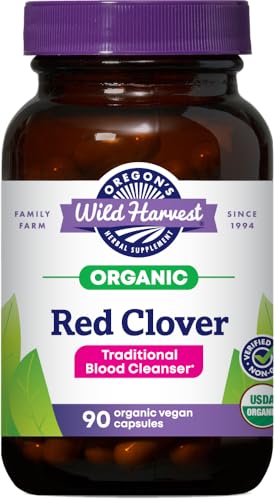

Red Clover and Liver Health
Concerns about liver health are sometimes raised with various supplements. However, studies specifically assessing the safety of red clover isoflavones have generally not indicated a significant risk to liver function in healthy individuals when used appropriately. An in vitro safety assessment, for instance, has explored the safety profile of red clover isoflavones [3].
While routine monitoring of liver function is not typically recommended for healthy individuals using red clover, anyone with pre-existing liver conditions or who experiences symptoms such as unusual fatigue, dark urine, or yellowing of the skin or eyes, should discontinue use and consult a healthcare professional immediately.


Long-Term Safety Profile
The long-term safety of red clover isoflavones has been a subject of ongoing research. Studies have evaluated their use over extended periods, with some investigations spanning several months to a year or more. The data generally supports a favorable safety profile for many women during these periods [5]. For instance, red clover isoflavones have been shown to influence serum lipid profiles in postmenopausal women, with studies indicating a lowering of serum LDL cholesterol in some cases[6][7]. These observations are part of the broader safety assessment.
While the existing evidence suggests good tolerability for many, it is important to remember that individual responses can vary. Continued research helps to build a more comprehensive understanding of the long-term effects of red clover isoflavones and their various constituents, such as formononetin[8][9][10].
References
- Red clover isoflavones are safe and well tolerated in women with a family history of breast cancer. Menopause international, 2008
- Efficacy of phytoestrogens for menopausal symptoms: a meta-analysis and systematic review. Climacteric : the journal of the International Menopause Society, 2015
- Red clover and soy isoflavones–an in vitro safety assessment. Gynecological endocrinology : the official journal of the International Society of Gynecological Endocrinology, 2011
- Chemical and biological characterization and clinical evaluation of botanical dietary supplements: a phase I red clover extract as a model. Current medicinal chemistry, 2004
- Soy and red clover for mid-life and aging. Climacteric : the journal of the International Menopause Society, 2006
- Influence of red clover-derived isoflavones on serum lipid profile in postmenopausal women. The journal of obstetrics and gynaecology research, 2009
- Red clover isoflavones enriched with formononetin lower serum LDL cholesterol-a randomized, double-blind, placebo-controlled study. European journal of clinical nutrition, 2015
- Formononetin: pharmacological properties and therapeutic potential. Naunyn-Schmiedeberg's archives of pharmacology, 2025
- DESIGNER fraction concept unmasks minor bioactive constituents in red clover (Trifolium pratense L.). Phytochemistry, 2023
- Quantitative Analysis of Isoflavones from Fabaceae Species and Their Chemopreventive Potential on Breast Cancer Cells. Molecules (Basel, Switzerland), 2025
These statements have not been evaluated by the Food and Drug Administration. This information is not intended to diagnose, treat, cure, or prevent any disease. Content is for informational purposes only and is not medical advice; consult a qualified healthcare provider before starting any supplement. As an Amazon Associate we earn from qualifying purchases.
