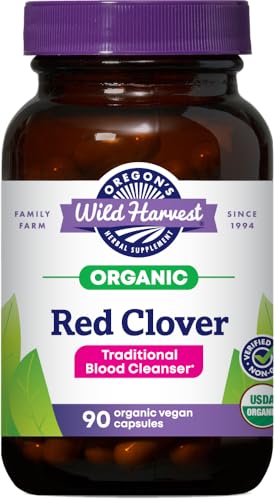
Red clover (Trifolium pratense) is a plant that contains isoflavones, which are compounds sometimes referred to as phytoestrogens. These compounds have been explored for their potential role in supporting women’s health during midlife and menopause.
This post contains affiliate links. As an Amazon Associate we earn from qualifying purchases at no extra cost to you.
While red clover isoflavone supplements may be an option for some women, it’s important to understand that they are not suitable for everyone. Certain health conditions and situations warrant caution or avoidance. This article outlines key considerations for individuals contemplating red clover isoflavone supplementation.
Understanding Phytoestrogens and Hormonal Sensitivity
Red clover isoflavones are classified as phytoestrogens, meaning they are plant-derived compounds that can have estrogen-like effects in the body [1]. Because of this characteristic, individuals with conditions that are sensitive to estrogen levels may need to exercise caution.
The interaction of phytoestrogens with estrogen receptors means that careful consideration is necessary, particularly for those with a history of hormone-sensitive conditions. Always discuss your individual health profile with a healthcare professional before starting any new supplement regimen.
Individuals with Hormone-Sensitive Cancers or Conditions
Women with a history of hormone-sensitive cancers, such as certain types of breast cancer, endometrial cancer, or ovarian cancer, should approach phytoestrogen-containing supplements with caution [2]. The potential for red clover isoflavones to interact with estrogen receptors may be a concern in these situations.
Similarly, individuals with other hormone-sensitive conditions, or those undergoing treatment for such conditions, should seek guidance from their healthcare provider. The safety profile in these specific populations needs to be carefully evaluated on an individual basis.

Pregnancy and Breastfeeding
The use of red clover isoflavones is generally not recommended during pregnancy or while breastfeeding. There is insufficient research to establish the safety of these supplements in pregnant or lactating women and their infants [3].
It is always prudent to avoid herbal supplements unless specifically advised by a healthcare professional during these sensitive periods to ensure the well-being of both mother and child.
Interactions with Medications
Red clover isoflavones may interact with certain medications. For example, due to their potential estrogenic activity, they might theoretically interact with hormone therapies, including estrogen replacement therapy [4].
Additionally, red clover may have mild blood-thinning properties, which could potentially interact with anticoagulant medications or antiplatelet drugs. Individuals taking such medications should discuss red clover isoflavone supplementation with their healthcare provider to avoid potential adverse effects or altered medication efficacy.
Individuals with Bleeding Disorders or Prior to Surgery
As mentioned, red clover may possess mild anticoagulant effects [5]. For individuals with known bleeding disorders or those scheduled for surgery, this characteristic is an important consideration. The potential for increased bleeding risk, even if minor, warrants caution.
It is generally advised to discontinue red clover isoflavone supplements at least two weeks prior to any scheduled surgical procedure to minimize any potential impact on blood clotting. Always inform your surgeon and anesthesiologist about all supplements you are taking.
Liver Conditions
While generally considered safe for liver function in healthy individuals, those with pre-existing liver conditions should exercise caution when considering red clover isoflavone supplements. The liver is responsible for metabolizing many compounds, including those from supplements.
Individuals with impaired liver function should consult with their healthcare provider to ensure that red clover isoflavones would not place undue stress on the liver or interact negatively with their specific condition or medications.


References
- Taking an integrated approach: managing women with phytoestrogens. Climacteric : the journal of the International Menopause Society, 2011
- Non-estrogen conventional and phytochemical treatments for vasomotor symptoms: what needs to be known for practice. Climacteric : the journal of the International Menopause Society, 2012
- Natural strategies to optimize estrogen levels in aging women: mini review. Frontiers in aging, 2025
- Treatment of menopause-associated vasomotor symptoms: position statement of The North American Menopause Society. Menopause (New York, N.Y.), 2004
- Treating hot flushes without hormone replacement therapy. The Journal of family practice, 2003
These statements have not been evaluated by the Food and Drug Administration. This information is not intended to diagnose, treat, cure, or prevent any disease. Content is for informational purposes only and is not medical advice; consult a qualified healthcare provider before starting any supplement. As an Amazon Associate we earn from qualifying purchases.
