As women navigate the midlife transition, understanding various natural compounds that may support well-being becomes increasingly relevant. Red clover isoflavones are plant-derived compounds that have garnered attention for their potential interactions within the body, particularly concerning estrogen receptors.
This post contains affiliate links. As an Amazon Associate we earn from qualifying purchases at no extra cost to you.
These isoflavones, often referred to as phytoestrogens, are not estrogens themselves, but they can engage with the body’s estrogen receptor system. Exploring this mechanism of action can help clarify how red clover isoflavones may influence physiological processes.
What are Phytoestrogens and Red Clover Isoflavones?
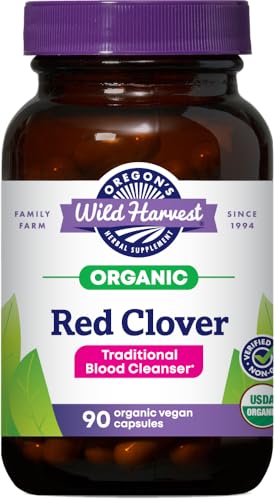
Phytoestrogens are plant-derived compounds that, due to their structural similarities to human estrogens, can interact with estrogen receptors in the body [1]. Red clover (Trifolium pratense L.) is a notable source of these compounds, particularly isoflavones [2]. The primary isoflavones found in red clover include genistein, daidzein, formononetin, and biochanin A[1][3].
These specific red clover isoflavones are known to be absorbed and metabolized within the body. Their activity is closely linked to how they engage with various cellular receptors, influencing different biological pathways. Understanding these interactions is key to appreciating their potential role in supporting women’s health during midlife.


The Estrogen Receptor System: A Brief Overview
The human body contains two main types of estrogen receptors: estrogen receptor alpha (ERα) and estrogen receptor beta (ERβ) [4]. These receptors are found in various tissues and organs throughout the body, and their activation by estrogen or estrogen-like compounds can trigger a wide range of cellular responses [4].
The distribution of ERα and ERβ varies across different tissues, and their activation can lead to distinct biological outcomes. For example, ERα is highly expressed in tissues like the uterus and mammary glands, while ERβ is more prevalent in the ovaries, brain, bone, and cardiovascular system [4]. The specific type of receptor that is engaged, and where it is located, plays a significant role in the overall effect of any compound interacting with the estrogen receptor system.
How Red Clover Isoflavones Interact with Estrogen Receptors
Red clover isoflavones are considered selective estrogen receptor modulators (SERMs), meaning they can exhibit different effects depending on the target tissue and the specific estrogen receptor they bind to [2]. Research indicates that these phytoestrogens, including daidzein and genistein, can bind to both ERα and ERβ, but often show a preferential binding to ERβ[1][5]. This differential binding affinity is a critical aspect of their mechanism of action.
The ability of red clover isoflavones to interact with ERβ is a focus of ongoing research. For instance, studies using yeast-based fluorescent assays have detected the binding of isoflavones and phytoestrogen-rich plant extracts to ERβ [5]. This selective engagement with ERβ may contribute to their varied influence on different bodily systems, as ERβ is involved in numerous physiological functions [4].
Beyond direct receptor binding, some red clover isoflavones, such as biochanin A and formononetin, have also been identified as ligands for the human aryl hydrocarbon receptor (AhR) [3]. This suggests a broader range of potential cellular interactions beyond just the estrogen receptor system, adding to the complexity of their biological activities.
Influence on Estrogen Levels and Metabolism
The interaction of red clover isoflavones with estrogen receptors does not necessarily mean they directly alter circulating estrogen levels in all contexts. However, some research suggests a potential influence on estrogen metabolism. For example, a study in female mice indicated that red clover isoflavones could influence estradiol concentration [6]. This highlights the intricate relationship between phytoestrogens and endogenous hormone levels.
The gut microbiota also plays a significant role in the metabolism and bioavailability of phytoestrogens, including those from red clover [7]. The conversion of certain isoflavones into more active forms, such as equol from daidzein, is dependent on specific gut bacteria [7]. Therefore, individual differences in gut microbiome composition may influence how effectively red clover isoflavones are processed and how they subsequently interact with estrogen receptors and potentially impact estrogen levels.
Implications for Midlife and Menopause
During midlife and the menopausal transition, women experience fluctuating and eventually declining estrogen levels, which can lead to various physical changes [8]. Phytoestrogens, including those from red clover, have been explored for their potential to interact with the estrogen receptor system during this time[2][8]. Their ability to engage with estrogen receptors, particularly ERβ, suggests a possible modulating effect on tissues responsive to estrogen [1].
It is important to understand that while red clover isoflavones interact with estrogen receptors, they do not replace the body’s own estrogen production. Instead, they act as modulators, potentially offering a different kind of signaling to cells that possess these receptors. This mechanism differs from pharmaceutical hormone replacement, providing a distinct approach for women seeking natural options to support their well-being during menopause[2][9].
References
- Daidzein and Genistein: Natural Phytoestrogens with Potential Applications in Hormone Replacement Therapy. International journal of molecular sciences, 2025
- Phytoestrogens derived from red clover: an alternative to estrogen replacement therapy?. The Journal of steroid biochemistry and molecular biology, 2005
- Red clover isoflavones biochanin A and formononetin are potent ligands of the human aryl hydrocarbon receptor. The Journal of steroid biochemistry and molecular biology, 2008
- The Dual Faces of Oestrogen: The Impact of Exogenous Oestrogen on the Physiological and Pathophysiological Functions of Tissues and Organs. International journal of molecular sciences, 2024
- Detection of isoflavones and phytoestrogen-rich plant extracts binding to estrogen receptor β using a yeast-based fluorescent assay. Analytical biochemistry, 2024
- Red Clover Isoflavones Influence Estradiol Concentration, Exercise Performance, and Gut Microbiota in Female Mice. Frontiers in nutrition, 2021
- From Gut to Hormones: Unraveling the Role of Gut Microbiota in (Phyto)Estrogen Modulation in Health and Disease. Molecular nutrition & food research, 2024
- The effects of phytoestrogens on postmenopausal health. Climacteric : the journal of the International Menopause Society, 2021
- Natural strategies to optimize estrogen levels in aging women: mini review. Frontiers in aging, 2025
These statements have not been evaluated by the Food and Drug Administration. This information is not intended to diagnose, treat, cure, or prevent any disease. Content is for informational purposes only and is not medical advice; consult a qualified healthcare provider before starting any supplement. As an Amazon Associate we earn from qualifying purchases.
