Navigating the changes of midlife and menopause often involves exploring various options for symptom support. Among the herbal approaches, red clover isoflavones and black cohosh are frequently discussed. Both have been studied for their potential roles in addressing common menopausal experiences.
This post contains affiliate links. As an Amazon Associate we earn from qualifying purchases at no extra cost to you.
This article provides a comparative overview of red clover isoflavones and black cohosh, examining the available evidence regarding their mechanisms and reported effects. Understanding the distinctions and similarities between these botanical options can help inform personal choices.
Understanding Red Clover Isoflavones
Red clover (Trifolium pratense) is a legume rich in isoflavones, which are plant compounds that can interact with estrogen receptors in the body [1]. These compounds are sometimes referred to as phytoestrogens due to their structural similarity to human estrogen [1]. The primary isoflavones found in red clover include genistein, daidzein, formononetin, and biochanin A [2].
The interest in red clover for menopausal support stems from the idea that its isoflavones might help mitigate symptoms associated with fluctuating estrogen levels during menopause. Research has explored its potential effects on various menopausal discomforts, though the overall evidence strength is considered moderate [3].
Studies have investigated red clover’s potential to help with symptoms like hot flashes and night sweats. While some research has indicated modest benefits, results have not always been consistent across all studies [4]. It’s important to note that the efficacy can vary depending on the specific red clover extract used, the dosage, and individual responses.


Exploring Black Cohosh for Menopause
Black cohosh (Cimicifuga racemosa, also known as Actaea racemosa) is another botanical frequently considered for menopausal symptom support. Its use dates back to traditional Native American medicine [5]. Unlike red clover, which contains phytoestrogens, the mechanisms of action for black cohosh are not fully understood, and it does not appear to act via phytoestrogenic pathways [2].
Instead, research suggests black cohosh may interact with neurotransmitter systems, such as serotonin, or have selective estrogen receptor modulator (SERM)-like activity, meaning it might have tissue-specific effects without being a direct estrogen[5][6]. Some studies have also explored its potential influence on dopamine receptors [7].
Black cohosh has been extensively studied, particularly for its potential to help reduce hot flashes and night sweats. A Cochrane review from 2012 concluded that there was insufficient evidence to support the use of black cohosh for menopausal symptoms, citing methodological limitations and inconsistent results across trials [8]. However, other reviews have suggested some evidence of efficacy for hot flashes[5][9], highlighting the mixed nature of the research findings.
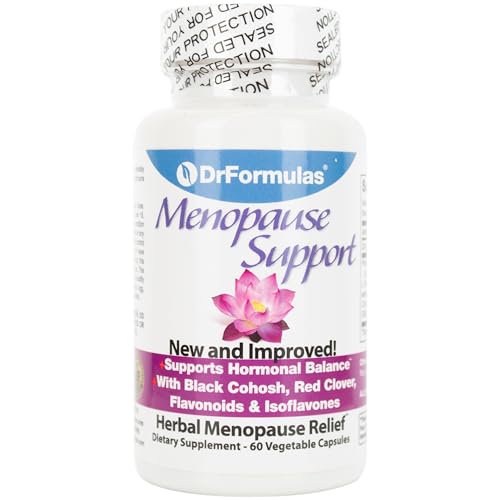
Key Differences: Red Clover vs. Black Cohosh
The most significant distinction between red clover and black cohosh lies in their active compounds and proposed mechanisms of action. Red clover’s primary active components are isoflavones, which are phytoestrogens that can interact with estrogen receptors [1]. This interaction is thought to be central to its potential effects on menopausal symptoms [1].
In contrast, black cohosh does not contain phytoestrogens and its mechanisms are believed to involve non-estrogenic pathways, potentially influencing neurotransmitters or having SERM-like actions[2][5]. This difference in mechanism means they may exert their effects on the body through distinct pathways.
Another difference lies in the breadth of research and consistency of findings. While both have been studied, the evidence for both remains moderate, with some studies showing benefits and others reporting minimal or no effect[4][8]. The overall consensus on efficacy for menopausal symptoms, particularly hot flashes, is somewhat mixed for both botanicals.
Potential Benefits and Considerations
Both red clover and black cohosh have been explored for their potential to support women experiencing common menopausal symptoms, primarily hot flashes and night sweats[4][9]. Some women report finding relief with these botanical options, which contributes to their continued popularity.
When considering either red clover or black cohosh, it’s important to recognize that individual responses can vary significantly. Factors such as genetics, metabolism, gut flora, and the specific formulation of the supplement can influence how a person responds [1]. What may be helpful for one person might not be for another.
The strength of evidence for both botanicals in menopausal symptom support is considered moderate [3]. While some studies suggest benefit, others have not found a significant difference compared to placebo[4][8]. This underscores the importance of a measured approach and personal observation when considering these options.
Safety and Interactions
Both red clover and black cohosh are generally considered safe for short-term use in healthy individuals when taken as directed. However, like all supplements, they are not without potential considerations and possible interactions.
Red clover, due to its phytoestrogenic nature, should be used with caution by individuals with a history of estrogen-sensitive conditions [1]. There is limited information on its long-term safety. Black cohosh has been associated with some reports of liver concerns, although causality is not definitively established and is rare [10].
It is crucial to be aware of potential interactions with medications. For example, black cohosh may interact with certain drugs, including those metabolized by the liver [10]. Red clover may also have theoretical interactions due to its phytoestrogenic activity [10]. Always discuss any supplements you are considering with a healthcare professional, especially if you are taking other medications or have underlying health conditions.
References
- Phytoestrogens: endocrine disrupters or replacement for hormone replacement therapy?. Maturitas, 2003
- Comparison of hormonal activity (estrogen, androgen and progestin) of standardized plant extracts for large scale use in hormone replacement therapy. The Journal of steroid biochemistry and molecular biology, 2003
- Efficacy of Herbal Remedies in Menopause: Bridging Traditional Medicine and Modern Therapeutics. Current drug research reviews, 2025
- Botanical and dietary supplements for menopausal symptoms: what works, what does not. Journal of women’s health (2002), 2005
- Menopause: a review of botanical dietary supplements. The American journal of medicine, 2005
- Nonhormonal therapies for hot flashes in menopause. American family physician, 2006
- A review of non-hormonal options for the relief of menopausal symptoms. Treatments in endocrinology, 2006
- Black cohosh (Cimicifuga spp.) for menopausal symptoms. The Cochrane database of systematic reviews, 2012
- A review of effective herbal medicines in controlling menopausal symptoms. Electronic physician, 2017
- Drug-herb interactions with herbal medicines for menopause. The journal of the British Menopause Society, 2004
These statements have not been evaluated by the Food and Drug Administration. This information is not intended to diagnose, treat, cure, or prevent any disease. Content is for informational purposes only and is not medical advice; consult a qualified healthcare provider before starting any supplement. As an Amazon Associate we earn from qualifying purchases.
