Red clover isoflavones are a group of plant-based compounds found naturally in Trifolium pratense, the red clover plant, and include four main types: formononetin, biochanin A, daidzein, and genistein[1]. While red clover itself is the richest known botanical source, related isoflavones appear across a broader range of legumes and fermented foods, making dietary intake more nuanced than simply eating one specific plant. Understanding which foods high in red clover isoflavones or their close relatives are accessible in everyday eating can help you make informed choices about whether diet alone meets your needs or whether supplementation deserves consideration.
This post contains affiliate links. As an Amazon Associate we earn from qualifying purchases at no extra cost to you.
What Are Red Clover Isoflavones and Why Do Food Sources Matter?
Red clover contains four isoflavones that set it apart from most other plant sources. Formononetin and biochanin A are the two compounds most unique to red clover and certain legumes; once consumed, the body converts them into daidzein and genistein, respectively. Daidzein and genistein are also found directly in soy and other legumes, meaning there is meaningful overlap between red clover isoflavones and soy isoflavones at the metabolic level.
These compounds belong to the broader phytoestrogen family and interact weakly with estrogen receptors in the body. For a fuller look at how researchers believe they work, see our overview on isoflavone benefits and the science behind phytoestrogens.
The Primary Natural Source: Red Clover Itself
Red clover (Trifolium pratense) is grown commercially in many parts of the world, primarily as animal fodder and as a cover crop. As a human food, it has a much longer history in herbal medicine than in everyday cooking. The aerial parts of the plant, particularly the flower heads and young leaves, contain the highest concentrations of isoflavones. However, these are not staple foods in most modern diets.
Ways People Consume Red Clover
- Red clover sprouts: Young sprouts from red clover seeds can be eaten raw in salads or sandwiches, and the isoflavone content is genuinely substantial for a whole food. Growing conditions matter a great deal: sprouts raised for 10 days under continuous white light at 25 °C reached 562 mg of isoflavones per 100 g of fresh mass, the highest of the conditions tested, so a figure like that is a best case rather than what an arbitrary punnet contains[2].
- Red clover tea: Dried flower heads are steeped in hot water to produce an herbal infusion. Isoflavone extraction into water is partial, so tea delivers considerably less than concentrated extracts.
- Fresh or dried flowers: Occasionally used as a culinary garnish or added to herbal preparations, though this is uncommon in Western cooking.
- Herbal tinctures: Alcohol-based preparations may concentrate isoflavones more effectively than water-based teas, but these sit closer to the supplement category than whole food intake.
Practically speaking, most people in Western countries have limited access to culinary-grade red clover in quantities that would deliver meaningful isoflavone doses. This is one reason why standardized extracts became the primary vehicle for red clover isoflavone delivery in research and commercial use.
Related Food Sources: Legumes and Beyond
Because the body converts several isoflavones into shared metabolites, foods rich in daidzein and genistein can partially replicate the downstream activity associated with red clover. Isoflavones occur across the legume family — soy, red and white clover, alfalfa and beans — with soy-derived products the most significant food source in human diets[3]. The following food categories are the most relevant.
Soy Foods
Soy is the single best-studied and most concentrated dietary source of daidzein and genistein among commonly eaten foods. Fermented soy products tend to deliver isoflavones in a more bioavailable form because fermentation breaks down the sugar molecules (glycosides) attached to isoflavones, converting them into free aglycone forms that absorb more readily in the gut. This is one respect in which red clover differs from soy rather than merely overlapping with it: soy delivers its isoflavones largely as poorly absorbed glycosides, whereas red clover carries mostly free aglycones already[2].
Other Legumes
Chickpeas, lentils, fava beans, mung beans, and kidney beans all contain modest amounts of isoflavones, including formononetin in some cases; chickpeas in particular carry both formononetin and biochanin A, the two isoflavones most characteristic of red clover[4]. Levels are generally lower than soy but still contribute meaningfully to overall dietary isoflavone intake, particularly in populations who eat legumes daily.
Alfalfa and Clover Sprouts
Alfalfa sprouts contain formononetin and related compounds at low but detectable levels. As noted above, red clover sprouts are an even more direct source. Both are available in some health food stores and can be grown at home.
Flaxseed
Flaxseed is primarily a source of lignans rather than isoflavones, so it is not a true red clover substitute. However, its role as a broad phytoestrogen source is sometimes relevant in conversations about hormonal dietary support.
Top Food Sources at a Glance
| Food | Relevant Isoflavones | Approximate Relative Content | Notes |
|---|---|---|---|
| Red clover sprouts | Formononetin, biochanin A, daidzein, genistein | High (for a whole food) | Most direct dietary source; availability is limited |
| Tempeh (fermented soy) | Daidzein, genistein | High | Fermentation improves bioavailability |
| Miso paste | Daidzein, genistein | Moderate to high | Fermented; sodium content is a consideration |
| Edamame (whole soybeans) | Daidzein, genistein | Moderate to high | Less fermented but still a strong source |
| Tofu | Daidzein, genistein | Moderate | Levels vary by processing method |
| Chickpeas | Formononetin, biochanin A | Low to moderate | Widely available; good everyday option |
| Lentils | Daidzein, formononetin (trace) | Low to moderate | Good fibre source alongside isoflavones |
| Red clover herbal tea | Formononetin, biochanin A | Low (water extraction is partial) | Accessible but not highly concentrated |
| Alfalfa sprouts | Formononetin (trace) | Very low | More relevant as a supporting food |
Factors That Influence How Well You Absorb Dietary Isoflavones
Gut Microbiome Composition
The conversion of daidzein into equol, a metabolite with higher bioavailability and greater affinity for estrogen receptor beta than daidzein itself, depends on specific bacterial species in the gut. The widely repeated “up to 50 percent” figure describes soy-consuming Asian populations, not Western ones. When both groups were phenotyped by the same standardised method, 51 percent of Korean American women and girls were equol producers against 36 percent of Caucasian American women and girls[5], and reviews place the Western figure at roughly one third[6]. Exposure matters as well as bacteria: in a US cohort eating very little soy, only 17.5 percent produced equol[6]. So two people eating identical amounts of isoflavone-rich food can have very different physiological responses — and the more useful way to read that for a Western reader is that you are more likely than not to be a non-producer.
Fermentation and Food Processing
As noted above, fermented soy products deliver isoflavones in a more readily absorbed aglycone form. Cooking, canning, and other processing can reduce isoflavone content to varying degrees. Eating a variety of minimally processed legumes and fermented soy products is generally the most effective dietary strategy.
Dietary Fibre and Overall Diet Quality
A fibre-rich diet supports the gut bacteria involved in isoflavone metabolism. Diets high in ultra-processed foods and low in plant diversity may reduce the microbial diversity needed to convert isoflavones into their most active forms. For more on how diet quality intersects with phytoestrogen activity, visit our section on phytoestrogen metabolism and gut health.
Who May Struggle to Get Enough From Diet Alone
Several groups are unlikely to reach the isoflavone levels used in clinical research through diet alone, particularly if they are not regular consumers of soy or legumes:
- People following low-legume diets, including some paleo or carnivore dietary approaches
- Those with soy allergies or intolerances who cannot rely on the most concentrated food sources
- Postmenopausal women seeking amounts associated with specific symptom research, which often exceed what typical Western diets provide
- People with altered gut microbiomes, such as those who have taken prolonged courses of antibiotics, who may convert isoflavones less efficiently
- Individuals living in areas where legume diversity and red clover products are simply not available or affordable
How Dietary Sources Compare to Supplements
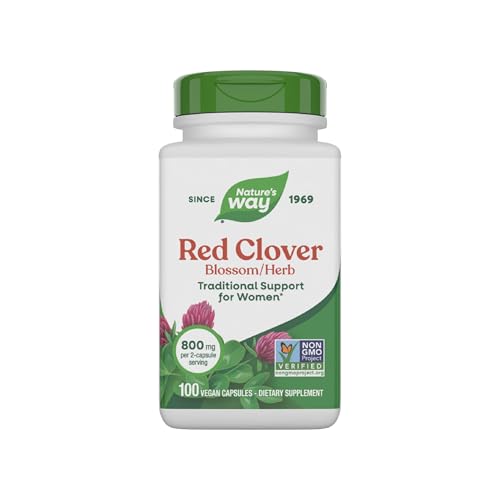
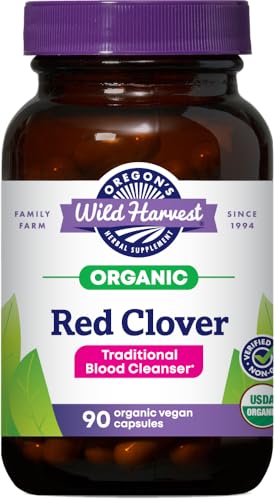
Standardized red clover extract supplements are formulated to deliver stated amounts of the four main isoflavones in consistent ratios. The menopause trials pooled in a systematic review used 40 to 82 mg of total isoflavones daily[7], and that is the band worth measuring any dietary plan against. Reaching it from red clover tea or sprouts alone is not realistic, and approximating it through food means substantial daily soy. It is also worth knowing that the isoflavone content of marketed red clover products has been shown to vary significantly between products, which changes how much actually reaches the gut[8].
That said, food sources offer advantages that isolated extracts do not. Whole legumes provide fibre, protein, vitamins, and a matrix of other phytochemicals that work together in ways a single-compound or standardized extract cannot fully replicate. The NIH Office of Dietary Supplements maintains fact sheets on botanical compounds and dietary intake that can help you evaluate the evidence for specific health outcomes.
For most healthy adults, emphasizing a legume-rich diet is a reasonable foundation. Supplementation becomes a more serious consideration when a specific health goal requires amounts or ratios of isoflavones that food cannot realistically provide. You can explore a comparison of supplement forms in our guide to choosing red clover supplement formats.
This article is for general informational purposes only and does not constitute medical advice. Speak with a qualified healthcare provider before making changes to your diet or supplement regimen, particularly if you have a hormone-sensitive condition or are taking medications.



Frequently Asked Questions
Are there foods that naturally contain all four red clover isoflavones?
Red clover itself, in the form of sprouts, flowers, or herbal preparations, is the primary food source that contains all four key isoflavones: formononetin, biochanin A, daidzein, and genistein together. Most other legumes contain daidzein and genistein but may offer only trace amounts of formononetin and little to no biochanin A. This is one reason red clover remains distinct from soy as a botanical source, even though their metabolic activity overlaps significantly.
Is soy a good substitute for red clover isoflavones in the diet?
Soy is the most practical everyday substitute, particularly fermented soy products like tempeh and miso. Because the body converts biochanin A into genistein and formononetin into daidzein anyway, eating soy delivers the same downstream metabolites. However, the specific starting compounds found in red clover may have their own activity before conversion, so soy is not an exact biochemical equivalent. It is a very reasonable and evidence-supported option for increasing overall isoflavone intake through food.
Does cooking destroy isoflavones in legumes?
Boiling can cause some water-soluble isoflavone loss, particularly if cooking water is discarded. Roasting and baking tend to preserve more isoflavone content. Fermentation generally increases bioavailability even if it does not dramatically change total isoflavone content. Overall, the reductions from normal home cooking are meaningful but not catastrophic, and cooked legumes still deliver useful amounts of these compounds.
Can I grow my own red clover for food use?
Yes, red clover seeds are widely available for sprouting and are straightforward to grow at home using a jar or sprouting tray. Young sprouts can be ready to eat within five to seven days. This is one of the most accessible ways to add genuine red clover isoflavones to your diet without relying on supplements. Flower heads from garden-grown red clover can also be used in herbal teas. Always use seeds sold specifically for sprouting or culinary use to avoid seed treatments intended for agricultural planting.
How do I know if my gut bacteria are converting isoflavones effectively?
There is no standard consumer test widely available to determine equol-producer status, though some research and functional medicine settings have explored this. Indirect signs of a healthy and diverse gut microbiome, such as regular consumption of fermented foods, dietary fibre, and a varied plant-based diet, are generally associated with better isoflavone metabolism. If you have taken long courses of antibiotics recently or have a known digestive condition, speaking with a healthcare provider about gut microbiome support may be worthwhile before relying heavily on dietary isoflavones for a specific health goal.
References
- Inhibition of extrahepatic human cytochromes P450 1A1 and 1B1 by metabolism of isoflavones found in Trifolium pratense (red clover). Journal of agricultural and food chemistry, 2004
- Evaluation of estrogenic activity of red clover (Trifolium pratense L.) sprouts cultivated under different conditions by content of isoflavones, calorimetric study and molecular modelling. Food chemistry, 2018
- Scientific Evidence Supporting the Beneficial Effects of Isoflavones on Human Health. Nutrients, 2020
- Isoflavones from black chickpea (Cicer arietinum L) sprouts with antioxidant and antiproliferative activity. Saudi journal of biological sciences, 2021
- Prevalence of daidzein-metabolizing phenotypes differs between Caucasian and Korean American women and girls. The Journal of nutrition, 2006
- S-(-)equol producing status not associated with breast cancer risk among low isoflavone-consuming US postmenopausal women undergoing a physician-recommended breast biopsy. Nutrition research (New York, N.Y.), 2014
- Trifolium pratense isoflavones in the treatment of menopausal hot flushes: a systematic review and meta-analysis. Phytomedicine : international journal of phytotherapy and phytopharmacology, 2007
- Variable isoflavone content of red clover products affects intestinal disposition of biochanin A, formononetin, genistein, and daidzein. Journal of alternative and complementary medicine (New York, N.Y.), 2008
These statements have not been evaluated by the Food and Drug Administration. This information is not intended to diagnose, treat, cure, or prevent any disease. Content is for informational purposes only and is not medical advice; consult a qualified healthcare provider before starting any supplement. As an Amazon Associate we earn from qualifying purchases.
